Organic BioRevolution: A Case Study in Co-op Power & Environmental Innovation
By Equal Exchange
It’s often the case that when you find a kindred spirit, it’s not just one thing you have in common; it’s more like you share some spiritual DNA. Equal Exchange’s co-op supply chain is like an international super highway connecting kindred spirits all working toward changing a broken system through, some might say, radical commitments: democracy, participation, equity, sustainability, innovation.
These ideals and connections aren’t simply theoretical or academic. They are alive, dynamic, and moving actual products—from (often far-away) farms to co-op shopping baskets to homes. By deliberately creating alternative norms and ways of doing business, collectively we are proving that business can be done with delicious and restorative—not extractive—results.
Co-op Power
Equal Exchange is a co-op owned by its workers. Its mission is to center the work and products of marginalized, small-scale farmers who have banded together into farming co-ops. In many marginalized, far-flung farming communities, government supports are scarce to non-existent, and the farmers’ own cooperative organization builds stability and resources that benefit the community. It’s the farmer co-op, owned and controlled not by outsiders, but by its members, which brings game-changing resources to life, often including fundamental services like education and health care, as well as future-focused resources such as coffee laboratories and compost facilities to continuously invest in their fundamental income source: organic, fair trade coffee.
When Equal Exchange sells to food co-ops in the US, a beautiful, completely cooperative supply chain is connected. Farmer co-op to Equal Exchange co-op to food co-op. While each co-op in the chain is independent, when pieced together, the supply chain prioritizes the needs of the members, independence over corporate influence, and values that extend beyond just the bottom line. The buying and selling of goods and services in this beautiful supply chain builds an alternative norm—and real economic value—through transparency, democracy, and solidarity.
Environmental Commitment
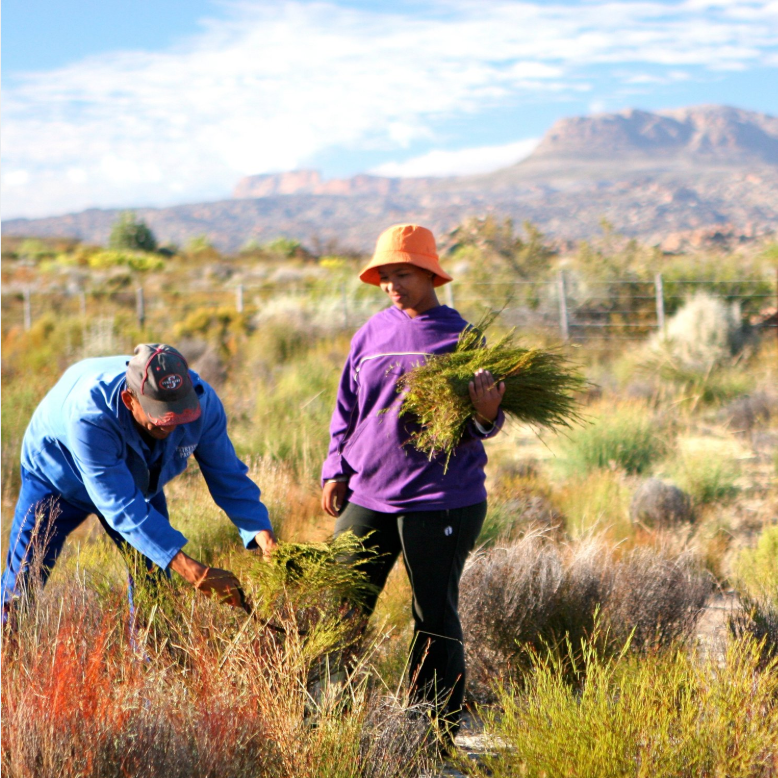
Photo Courtesy of Equal Exchange
Extractive philosophies are increasingly the norm. Environmentally speaking, the consequences of those practices often hit vulnerable communities the hardest, including many small farming communities. Climate change impacts weather patterns, creating floods or droughts in the wrong seasons, increasingly enabling plant diseases to spread. Chemical inputs for pest control and fertilizers leave soil depleted and plants dependent on a cycle of chemical replenishment. All these practices are costly for farmers and for our shared environmental resources.
Equal Exchange’s commitment to organic agriculture offers an important alternative. Farmers focus on regenerative techniques that work with their environment instead of against it. They compost farming byproducts and increasingly build organic *living* fertilizers—with good bacteria and microorganisms as the base—to continuously invest in healthy soil and resilient plants. They cultivate not just coffee, but many species of surrounding trees and plants, which serve many purposes: shade (for high-quality coffee), deep root systems (to retain water in farm plots and prevent erosion), and additional crops (for food and/or additional income). Not surprisingly, farming practices that are good for the environment often are good for the farmers tending the lands and ultimately are good for the eaters seeking healthy, clean, delicious food.
Organic BioRevolution Coffee as a Case Study
With 40 years of experience fairly trading with small farmer co-ops, Equal Exchange began to see a trend, and hatched the idea to work with food co-ops here in the US, on a special opportunity. Farmers have many more ideas to apply innovative environmental strategies to their work, but lack the additional resources to bring them to life. What could happen if we created those resources together?
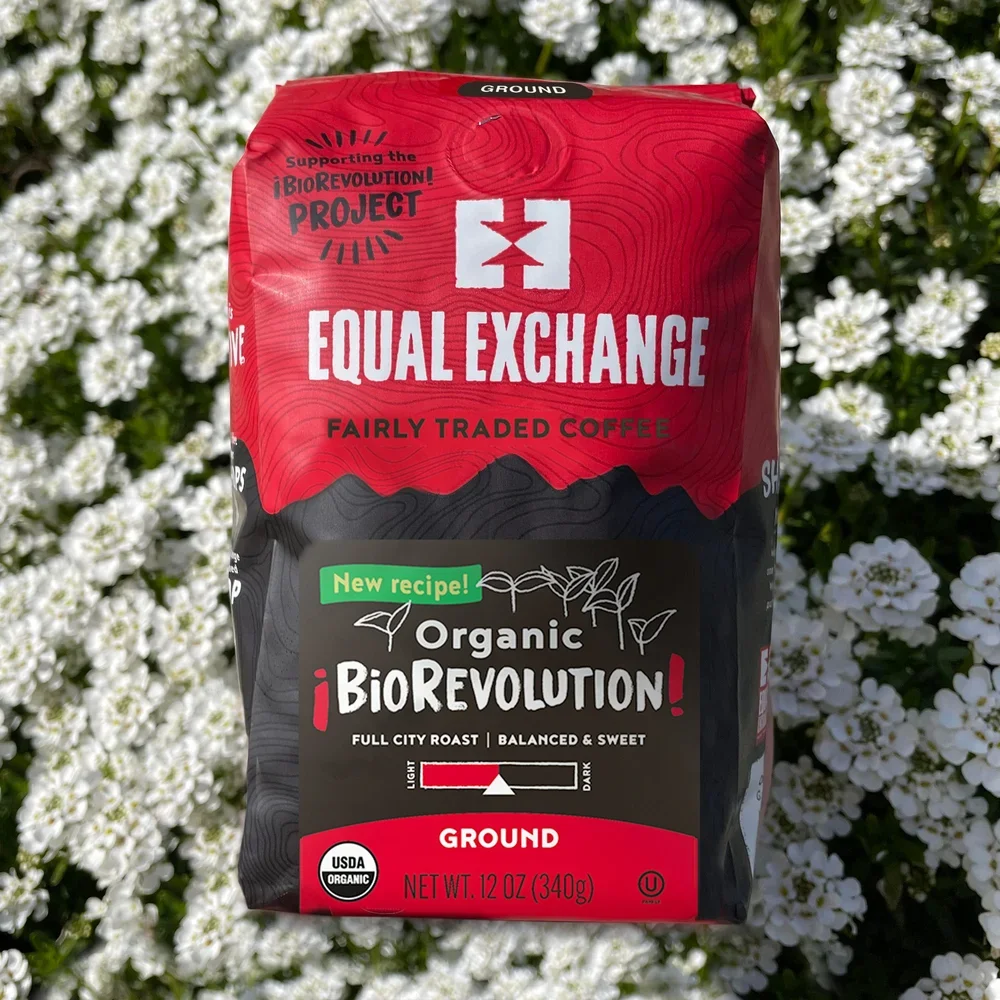
Photo Courtesy of Equal Exchange
Enter “Organic BioRevolution!” This is a special coffee that has all the “usual” unusual markers of Equal Exchange’s products: it’s organic, fairly traded, sourced from farmer co-ops and roasted by Equal Exchange as a worker co-op. But there’s an added component: with each pound of Organic BioRevolution coffee bought by shoppers, Equal Exchange dedicates an additional 50 cents to fund innovative environmental projects in farming communities. To date, this has generated over $100,000 in funds! The impact is compelling.
Farmers from 4 countries, representing 8 co-ops, have engaged in projects from the Organic BioRevolution fund. The fund deliberately connects farmers across borders to support farmer-led exchanges, share best practices, and inspire each other. Here are a few words from some of the participants at a gathering in Honduras:
“Despite the great challenges we face everyday whether in the field or wherever we work, there is always a door to keep moving forward. There is always someone who will offer us support to continue developing our capacity, so that we don’t feel like all the doors are closing on us, because there is always a vision for the future.” —Onésimo Ramírez from Chiapas, Mexico, member of the co-op Triunfo Verde
“I am amazed, and I’d like to implement many things in my cooperative based on what I have learned in this exchange. I feel very motivated by what I saw from the farmers here with their entrepreneurship and the added value they create.” —Karina Guadalupe Roblero from Chiapas, Mexico, member of the co-op CESMACH
Part of the beauty of this project is that as coffee drinkers continue to buy Organic BioRevolution, funds keep accumulating, and new ideas keep getting supported.
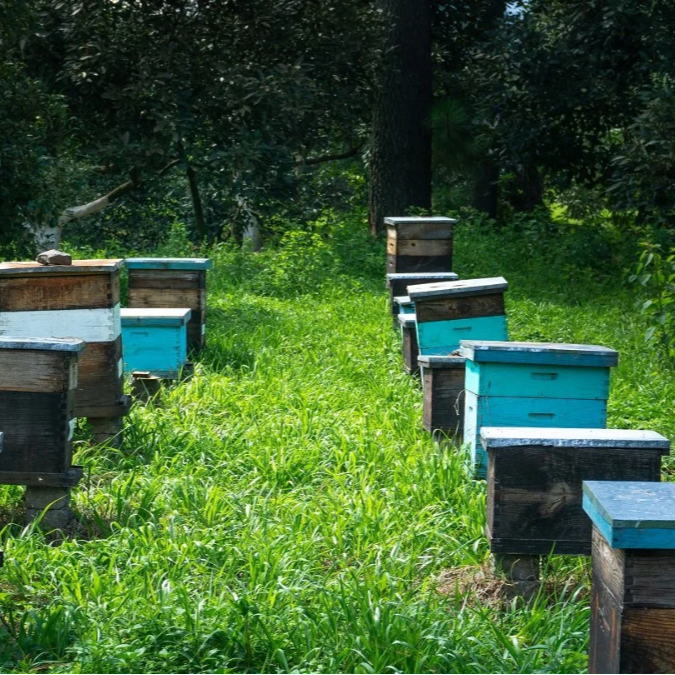
Photo Courtesy of Equal Exchange
One of the newer ideas gaining momentum is beekeeping. Farmers are incorporating a native stingless bee, the Melipona, into their organic farming strategies. The results are positively compounding: the populations of this native species are rebounding; their natural activities increase the pollination and therefore productivity of the coffee plants; their impact, of course, extends beyond just coffee: these pollinators help all manner of plants and crops thrive, which helps both the humans and the other fauna in these communities. The Meliponas also create a super high-quality honey, which farmers can use in their own traditional medicine practices as well as sell locally, adding an additional income stream. The farmers’ commitment to organic practices, in turn, is a meaningful benefit to these bee populations. Chemical fertilizers and pesticides are a threat to bees and other pollinators; sustainable, organic, innovative farming models allow for a more reciprocal relationship with pollinators (as well as so many other species!). Plant productivity and pollinator populations are not pitted against each other, but rather can benefit each other.
For more information on living soil, coffee, and beekeeping, and impact stories in the farmers’ own words, visit this Organic BioRevolution webpage. Purchase Organic BioRevolution to keep the co-op to co-op to co-op connection, and to keep the impact and innovation flowing.